
•
HVAC Tips
The fan is humming, the thermostat says cooling, and the house still sits at 79 degrees at 4 p.m. That is one of the more frustrating calls we get in a Brighton summer, partly because the system looks like it is working. Air is moving. Something is just missing the last step: actually pulling heat out of your house.
Before you assume the worst, there are a handful of things worth checking. A few you can handle yourself in ten minutes. The rest tell you it is time to bring someone out. Here is how our techs reason through it.
Start at the thermostat
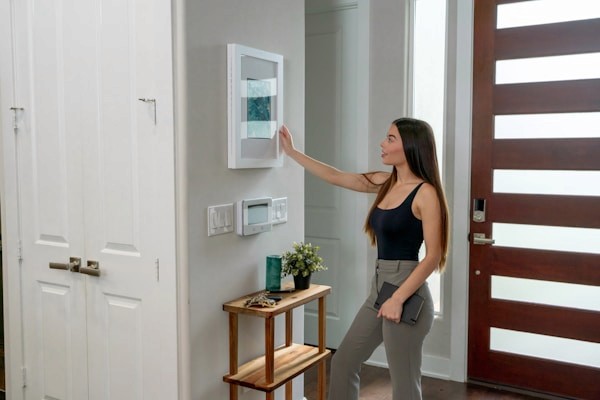
It sounds obvious, but a good share of no-cooling calls trace back to a setting. Confirm the thermostat is set to COOL, not just FAN. FAN circulates room-temperature air without running the compressor, which feels exactly like a broken AC. Drop the setpoint five degrees below the current room temperature and listen for the outdoor unit to kick on. If the screen is dim or blank, replace the batteries. A thermostat losing power will keep the indoor fan running while quietly failing to call for cooling.
Check the filter and the vents
A clogged filter is the single most common reason an AC runs without cooling. When the filter is packed with dust, and homes along the northern metro pull in plenty of it during a dry, windy summer, airflow across the indoor coil drops. The coil gets too cold, frost forms, and eventually the system is blowing air over a block of ice instead of cooling your rooms. Pull the filter. If you cannot see light through it, replace it and give the system a few hours to recover. While you are at it, walk the house and make sure supply vents are not blocked by furniture or closed off in unused rooms.
Look at the outdoor unit
Go outside and hold your hand above the condenser. You should feel warm air being pushed up and out, and the large fan on top should be spinning. If the unit is humming but the fan is dead, that is often a failed capacitor, a common and affordable fix, but not a DIY one. Clear any grass, cottonwood fluff, or leaves matted against the coil fins, and keep at least two feet of open space around the whole cabinet. A condenser choked with debris cannot shed heat, so the house never cools.
The signs that point to refrigerant
If the filter is clean, the fan spins, and the house still will not cool, low refrigerant is a likely culprit. Look for ice on the copper lines running to the outdoor unit, a hissing sound, or air from the vents that is only slightly cool instead of cold. Refrigerant does not get used up, so if it is low, there is a leak, and simply topping it off without finding that leak only delays the next failure. This is where a professional gauge set and a real leak search earn their keep. If your system is older and running on R-22, a refrigerant problem is also a good moment to read up on how the new A2L refrigerant rules affect repair and replacement.
When to stop and call a pro
The outdoor fan will not spin, or the unit only hums.
You see ice on the refrigerant lines or the indoor coil.
Air from the vents never gets truly cold, even after a fresh filter.
The breaker for the AC keeps tripping.
The system short-cycles, turning on and off every few minutes.

A note for Brighton, Commerce City & Henderson homeowners
Homes across the northeast metro deal with a specific mix: fine, wind-blown dust off open land that loads up filters fast, plus a compressed cooling season that asks the AC to go from idle to full tilt in a matter of days. That combination is hard on airflow. If your system sat all winter and then hit its first 95-degree stretch struggling to keep up, a dirty filter and a tired capacitor are the usual suspects. Newer subdivisions around Brighton and Reunion often run two-story floor plans too, where a single undersized system cools the main floor fine but never quite reaches the bedrooms, a comfort problem that mimics a cooling failure but really comes down to airflow and sizing.
FAQs
Why is my AC running constantly but not cooling?
Usually restricted airflow or low refrigerant. A clogged filter, a frosted-over coil, or a leak all force the system to run nonstop while barely lowering the temperature. Start with the filter; if that is clean, it is time for a technician.
Should I turn my AC off if it is not cooling?
Yes, especially if you see ice forming. Switch the system to OFF and let it thaw for a few hours before running it again. Running a frozen system can damage the compressor, which is the most expensive part to replace.
How cold should the air from my vents be?
A properly working AC usually delivers air about 15 to 20 degrees cooler than the air going into the return. If the difference is much smaller than that, something is limiting the system’s capacity.
Can a smart thermostat cause cooling problems?
Occasionally. A miswired or low-battery thermostat can run the fan without calling for cooling. If you recently installed one, double-check the wiring or see our guide to smart thermostats.
Worked through the checklist and still sweating? Do not let a small problem cook all summer. Schedule a visit and we will find out exactly why your system is not keeping up, and tell you straight whether it is a quick fix or something bigger.
RELATED ARTICLES
Related Articles
Discover related articles covering expert advice, practical tips, and useful information for homeowners.
Whole Home Humidifiers in the Denver Metro: Types, Installation and Maintenance
Oct 23, 2026
•
HVAC Tips
Dry Winter Air in Denver Homes: Signs, Ideal Humidity and What to Do About It
Oct 23, 2026
•
HVAC Tips
Why Your Addition or Converted Room Is Always Too Hot or Too Cold, and How to Fix It in the Denver Metro
Oct 23, 2026
•
HVAC Tips